7 Window Ordering Mistakes in Batumi New Builds That Lead to Costly Redos
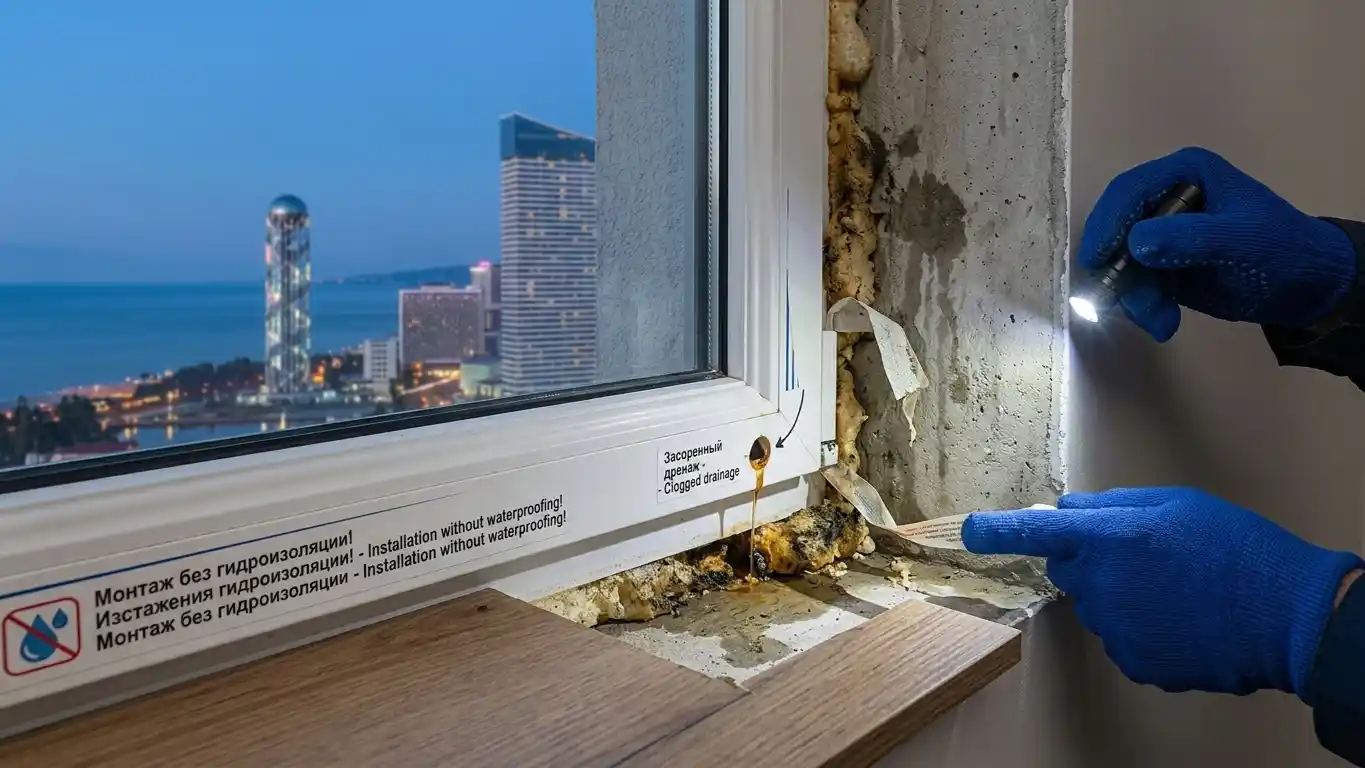
You've just bought an apartment with bare window openings, and now you're ordering glazing based on a photo from the internet, without a measurement or any idea what your specific building actually needs. Here's where new-build owners in Batumi lose the most money.
Buying an apartment in a new development in Batumi almost always means bare openings with no windows installed. This is where things get tricky: the same buyer who carefully compared developers and floor plans suddenly starts ordering glazing based on whatever seems cheapest or most convenient. A year or two later, the windows let in drafts, condensation forms between the panes, and the handles are loose. Redoing it all costs far more than getting it right the first time.
Here are seven mistakes we see most often among apartment owners in Batumi and Adjara.
1. Skipping the on-site measurement
Openings in new buildings are rarely perfectly even — that's normal in construction, but critical for windows. Estimated sizes or numbers taken from building documentation almost always differ from reality by a few millimeters, which is enough for a unit to either not fit or leave gaps. A free engineer visit for measurement isn't a formality — it's the only way to get windows that fit without on-site adjustments.
2. Ignoring sun exposure and floor level
A top-floor apartment facing the sun and a ground-floor unit in the building's shade have completely different energy needs and structural loads. The same double-chamber unit with low-E coating performs differently depending on the building's orientation, which affects both comfort and summer cooling bills.
3. Saving money by choosing fewer chambers
A single-chamber unit is cheaper upfront, but in Batumi's coastal climate, with its humidity swings, the difference in thermal and sound insulation shows up fast. Double-chamber units hold heat in winter and keep interiors cooler in summer — savings at order time turn into higher heating and cooling costs every season after.
4. Cheap hardware to cut corners
The profile itself might be decent, but handles, hinges, and locking mechanisms are usually the first thing cut to save money. Loose hardware is the number one reason for repeat service calls in the first year after installation. It's worth asking not just about the profile, but about a separate warranty on the hardware itself.
5. Not understanding sealing quality
Poor sealing means condensation between the panes within a season or two — and a unit like that can't be repaired, only fully replaced. Sealing quality isn't marketing language, it's a specific manufacturing process: butyl and secondary sealant quality, and consistent technology on an automated production line.
6. Ordering a "standard" window regardless of layout
Panoramic balcony glazing, a sliding terrace system, a kitchen-living room window with a view — each case has its own profile and opening-type requirements. Trying to fit a "standard window" where a sliding or frameless system is needed usually means redoing it within a year, or losing the view and functionality that were part of why the layout was chosen in the first place.
7. Going through intermediaries instead of the actual manufacturer
A chain of developer — contractor — subcontractor — workshop blurs responsibility: if something goes wrong, finding who's accountable and getting warranty service becomes complicated. Working directly with a manufacturer — with its own production line, certification, and clear warranty — removes unnecessary links and unnecessary markup.
How to avoid a redo
All seven mistakes have one thing in common: they're solved at the measurement and consultation stage, not after installation. It takes one engineer visit, a conversation about the real conditions of your specific apartment — floor, orientation, room type — and a quote based on facts, not averaged numbers found online.
GND Group manufactures double-glazed units and full-cycle window systems in Batumi, working directly with owners and developers across Adjara. Free on-site measurement, production within 5–7 working days, a 10-year warranty on unit sealing and 5 years on hardware. Request a measurement and get a quote built around your actual apartment — no overpaying, no redoing.