Glazing a Veranda in a Seaside House: Sliding Systems vs Casement Windows
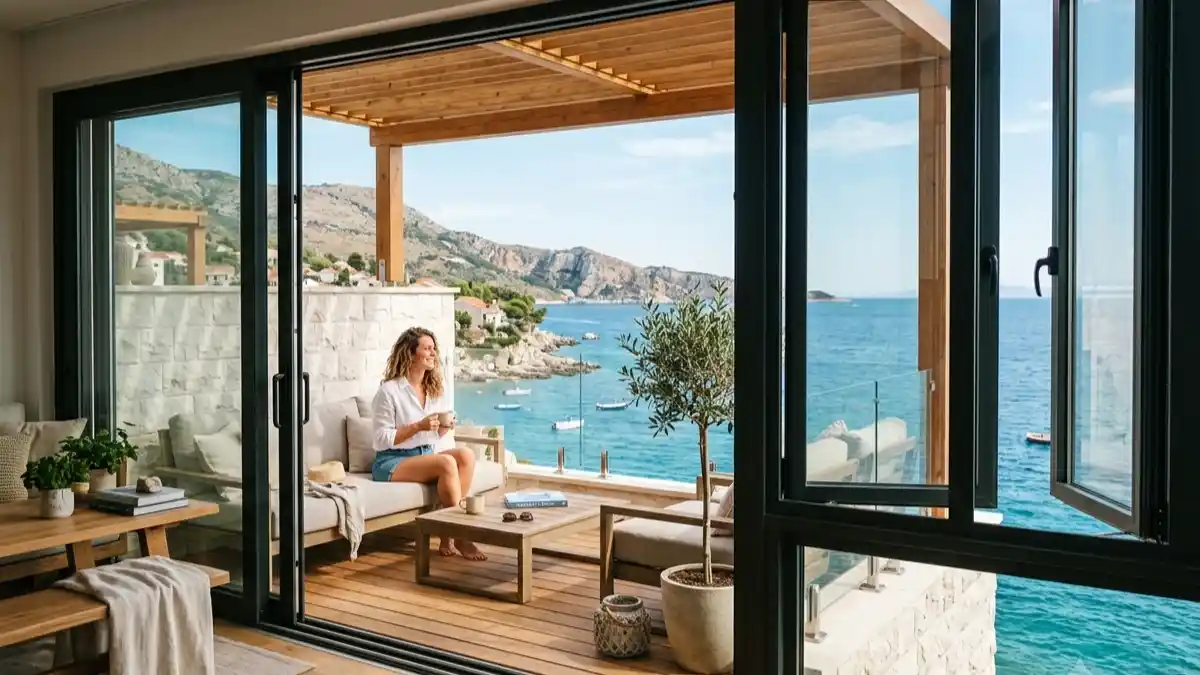
A sea view is the whole point of a veranda, but the way the windows open decides whether you'll actually enjoy that view every day. Here's how to choose.
Why the opening type matters more than you think
When homeowners in Batumi plan veranda glazing, they usually focus on profile color and glass thickness. The question of how the windows will open often gets pushed aside — yet it's exactly what determines how comfortable the space is day to day, how much usable room it gives you, and how long the hardware lasts near the sea.
A seaside terrace has its own challenges: salt in the air, wind, humidity swings, and the wish to open up the space fully during warm months. Let's compare the two main options.
Sliding systems
Panoramic sliding glazing is the most common choice for seaside verandas, and for good reason. Panels slide sideways instead of swinging out, saving space — especially useful on a narrow veranda or where furniture sits close to the windows. You can go frameless, for a nearly uninterrupted view of the water, or framed, which offers better thermal and sound insulation.
Advantages of sliding systems:
- Save floor space — no clearance needed for an opening sash
- Let you fully open the veranda in hot weather, turning it into an open-air terrace
- Work beautifully with floor-to-ceiling panoramic glazing
- Fit well with aluminum profiles, including warm aluminum for year-round use
The trade-off: sliding hardware — rollers and tracks — needs a bit more attention near the sea, where salt in the air is higher. With quality hardware and regular upkeep, this isn't a real obstacle.
Casement windows
Classic casement (hinged, outward-opening) windows seal more tightly against the frame, so they hold heat and sound slightly better if the veranda is used as a fully heated room year-round. They're also easier to open just a crack for ventilation.
The downside for a seaside terrace: a casement sash needs clearance to swing open, so part of the veranda's floor space and furniture layout has to be planned around it. On a small veranda, or one with a lounge area close to the glass, that can be inconvenient.
What suits a seaside house
If the veranda is meant as a summer space you want to open fully to the water view, sliding systems usually win — they give an open-air feel without eating up floor space. If the veranda is a heated, year-round room where airtightness and minimal heat loss in winter matter more, casement windows — or a mix of both — are worth considering.
In practice, many clients in Adjara go with a hybrid: panoramic sliding glazing on the main sea-facing wall, and casement sashes for ventilation in smaller sections.
What to check when ordering
Regardless of the opening type, a few things matter most for a seaside veranda:
- Low-E coating on the glass unit — reduces summer heat gain and winter heat loss
- Quality sealing at the joints — salt and moisture find weak spots fast
- Durable hardware and profile — warm aluminum and reliable fittings last longer in coastal air
We manufacture glass units and profile systems on our own production line in Batumi and can offer both sliding and casement glazing tailored to your veranda's layout. Request a free measurement visit — our engineer will assess the site relative to the sea and suggest the best glazing scheme with a cost estimate.