Laminated Glass vs Tempered Glass: When Triplex Is Worth It and When It's Overkill
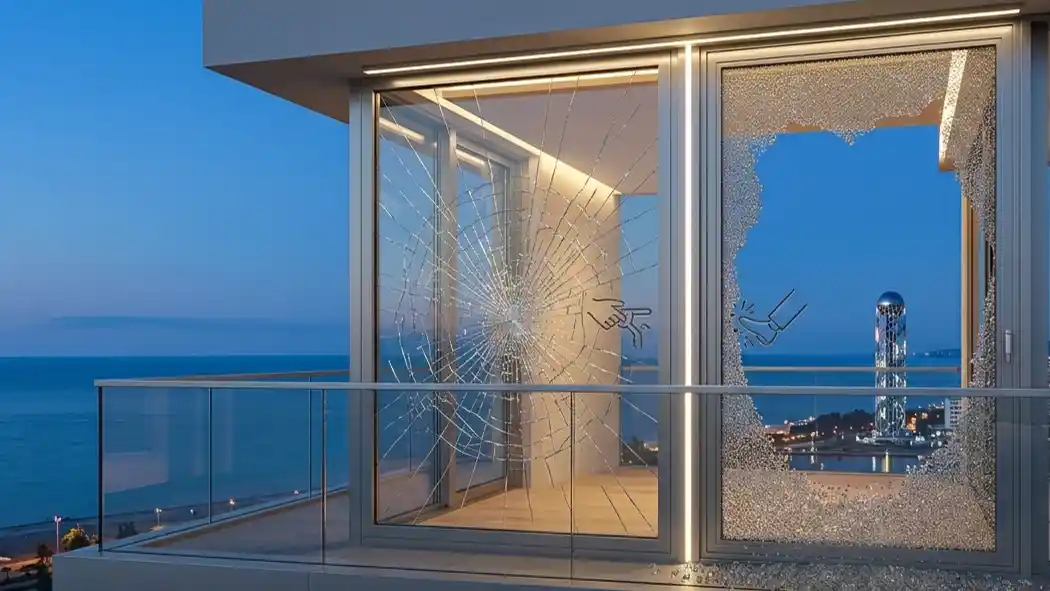
Builders and homeowners often treat laminated and tempered glass as interchangeable safety options — they're not, and the difference affects both your budget and real safety.
Two kinds of "safety glass" that aren't the same
When clients ask for "safety glass," they usually mean either tempered glass or laminated glass (triplex) — and treat them as the same thing. They're not, and the difference matters both for the budget and for how the glass behaves in an accident.
Tempered glass is heat-treated to be several times stronger than regular glass. When it breaks, it shatters into small, blunt pieces instead of sharp shards — that's its safety feature. But those pieces can still fall out of the frame.
Laminated glass (triplex) is built from two or more glass layers bonded with a strong interlayer film. If it cracks, the film holds the fragments in place, so the opening stays covered even after serious impact. That's a fundamentally different level of protection, especially anywhere a falling piece of glass could hurt someone.
Where triplex genuinely makes sense
Some applications call for laminated glass as a matter of basic safety logic, not just preference:
- Floor-to-ceiling facade glazing above ground level, especially in residential complexes and hotels
- Glass railings and balustrades on balconies, stairs, and terraces — triplex is what keeps the glass in place if it's damaged
- Panoramic glazing on upper floors, where a falling pane could injure people below
- Canopies, awnings, and any horizontal or sloped glass structures
In these cases, skipping triplex to save money is really a cut to safety, one that tends to surface later — during an insurance claim or a building inspection.
Where tempered glass is enough
There are just as many cases where triplex is a nice-to-have rather than a necessity:
- Standard apartment or house windows on lower floors, already held by a frame and not in a fall-risk zone
- Non-load-bearing interior partitions that aren't acting as a barrier against a height
- Standard loggia glazing without panoramic elements
Here, tempered glass fully covers the strength and breakage-safety requirement, and paying extra for laminated glass doesn't add meaningful protection if there's no height or structural load involved.
How to actually decide
Instead of defaulting to "the strongest option available," it helps to answer three questions: how high is the structure, is the glass acting as a load-bearing or protective barrier, and what happens if it breaks — could fragments fall on people below. Those answers usually make the choice obvious.
In premium residential and hotel projects, clients sometimes spec triplex across every glass element on the facade by default. That raises the budget without necessarily improving safety where there's no real fall risk.
What we do
We produce both tempered and laminated glass at our own facility in Batumi — from cutting on the TRUETEC CNC line through final processing, backed by a 10-year seal warranty on our insulated glass units. That lets us match the material to the actual task — facade, railing, panoramic glazing, or regular windows — instead of pushing one solution for everything.
If you're not sure which glass fits your project, send us the drawings or book a free on-site measurement in Batumi. We'll calculate both options so you can see the real difference in cost and safety.